
Our Early Years Foundation Stage (EYFS) team provides children with the best possible start to school life, giving children opportunities to follow their interests and fostering a lifelong love of learning.
We strive to ensure our children are happy, enthusiastic and confident learners with aspirations to excel in whatever they choose to do. In our EYFS provision, we deliver a broad and balanced curriculum of play-based activities alongside aspects of adult-directed teaching and learning opportunities. We aim to provide high-quality education for all our children, laying strong foundations for their future learning and development.
At Howletch our school vision underpins all aspects of school life. Our Foundation Stage is an integral part of the school, and this enables us to plan for children’s learning over the longer term, understand, assess, and meet their needs, whilst also preparing children for each phase of their education.
The high expectations within our EYFS provision enable each child to develop socially, physically, intellectually, and emotionally to achieve their full potential. Our practitioners understand that children learn through play, by adult modelling, by observing each other, and through guided learning and direct teaching.
We recognise each child as an individual. Each child brings their own experiences and interests into our setting; this range of starting points presents exciting possibilities for child development through a wide range of experiences. Our provision gives children the opportunity to consolidate, explore and test their skills, knowledge and understanding alongside their existing experiences.
We work in close partnership with parents and carers to ensure that each child is happy, safe and reaching their potential.
In nursery, pupils spend the majority of their time learning through play and child-initiated discovery. Children can access both the indoor and outdoor environment throughout the day and these are set up daily to stimulate learning across all areas of the Early Years Curriculum. Staff are always there to support children’s play, extend interactions and develop learning opportunities.
Children are taught in short-focused sessions where they spend time listening to stories, developing their language, practising their speaking and listening skills, and participating in maths, phonic and literacy learning activities.
In Reception, children engage in adult-directed learning in Phonics, Maths, English and Learning Means the World. Learning through play is also a large part of the day when children can choose where they would like to learn.
Early Years Maths
In Nursery and Reception, our teaching and environment is set up to ensure that all children develop firm mathematical foundations in a way that is fun and engaging, encouraging problem solving and investigation. Indoor and outdoor continuous provision provides the opportunity for children to learn through play and exploration. We use the Early Year Foundation Stage Framework and the six areas of early mathematical learning as a basis for our lessons and maths provision. They collectively provide a platform for everything children will encounter as they progress through their maths learning at Howletch Lane and beyond:
- Cardinality and counting
- Comparison
- Composition
- Pattern
- Shape and space
- Measures
Maths Hub Mastering Number Programme
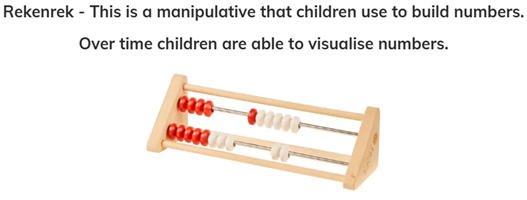
From September 2025, we began developing our Maths teaching and provision through participating in the Maths Hub Mastering Number Programme. This project aims to secure firm foundations in the development of good number sense for all children from Reception through to Year 1 and Year 2. The aim over time is that children will leave KS1 with fluency in calculation and a confidence and flexibility with number. Attention will be given to key knowledge and understanding needed in Reception classes, and progression through KS1 to support success in the future. Children use an abacus-like rekenrek to help them develop confidence and fluency with number. Use of a rekenrek is one element of the Mastering Number Programme.
At Howletch, we provide four, 10-15 minute teaching sessions for all children, in addition to their normal maths lessons. All class teachers contribute to an online community that includes regular training alongside critical reflection and sharing best practice.
What are the aims and benefits of the programme?
- Pupils will be able to clearly communicate their mathematical ideas
- Leaders, teachers and support staff will develop a secure understanding of how to build firm mathematical foundations
- Leaders, teachers and support staff will work to develop teaching strategies focused on developing fluency in calculation and number sense for all pupils
- Leaders, teachers and support staff will develop an understanding and use appropriate manipulatives to support the teaching of mathematical structures
At Howletch, we recognise that Mathematics is a gateway skill. We are passionate that our pupils leave Howletch with firm foundations in maths to support them in the future.
- RECEPTION MASTERING NUMBER OVERVIEW
- YEAR 1 MASTERING NUMBER OVERVIEW
- YEAR 2 MASTERING NUMBER OVERVIEW
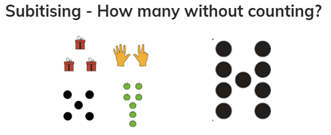
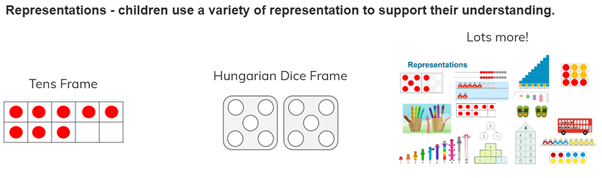
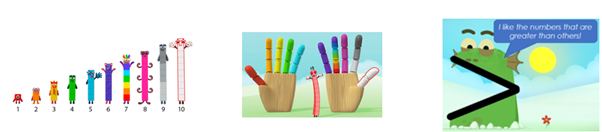
Within the programme children use a variety of resources, representations and models that help develop their sense of number. They explore subitising and investigate how a number can be composed of two or more smaller numbers. The programme also uses the engaging Numberblocks children’s TV series animations to support the key teaching points.
Drawing Club
What is Drawing Club?
Drawing Club is the approach we use in Reception in our school to teach Literacy. It was created by a practitioner called Greg Bottrill and it brings the magic of story into the classroom. It is a way to share skills including fine motor, maths, early writing, vocabulary and most importantly, imagination and excitement!
How do we teach it?
At the beginning of each week, we use a new quality text to grab the interest of the children. This could be a written text, a cartoon or a short film. When we use a book, we discuss what the children can see on the front cover, the title and make predictions about what the story could be about. We discuss the beginning, the middle and the end of the story.
If using a short film or cartoon, we would watch it together and have a conversation about it to discuss the characters and what had happened. The texts we use will link to our topic whenever appropriate.
We learn 5 words each week which link to the text. To help the children remember the words, we choose actions together as a class for every word. This is a way of developing new and exciting vocabulary in context that the children may not otherwise hear. We then encourage the children to use these words in their play.
Every Monday, we talk about the character and what might happen when we press the magic button on our drawings. For example, they might change in appearance, develop a superpower to help them to solve their problem, become invisible…the ideas are endless!
Throughout the week, in small groups we draw a setting from the story and generate ideas about how it could change. For example, in the story of The Billy Goats Gruff the bridge grows legs and runs away.
Then we go on an imaginary adventure, changing parts of the story – anything can happen when the magic is added!
How does Drawing Club link to writing?
Each time the children draw they have to add a ‘magic button’. To make the magic work, they have to add a secret code. This could be the sound they are learning that day, a word, a caption or full sentences – whatever we feel they need to reinforce. The secret code could also be a number or a maths fact.
What about non-fiction texts?
Alongside the fictional element of drawing club, we also make sure the children are exposed to quality information books that link to our Learning Means the World Topics.
They will be taught how to write lists, captions and simple pieces of factual information.
Why have we chosen Drawing Club?
Drawing Club is all about doing what is right for our children, to meet their needs and develop their interests. It is not a scheme. It is meant to be fun and exciting and give children the opportunity to explore a world of adventure so that they are fuelled ready to develop their writing skills as they move up through our school.
The fantastic thing about Drawing Club is that anything can happen. The more the children hear different ideas and talk about stories in a ‘What if…’ way, the more their imagination will ignite and they will become very skilled storytellers.

